
Fuel Cell Bipolar Plates

Metallic Bipolar Plate (MBPP) Expertise

PRECISION RESOURCE IS YOUR TRUSTED PARTNER FOR INNOVATIVE METAL BIPOLAR PLATE DEVELOPMENT AND MANUFACTURING SOLUTIONS.

Our advanced manufacturing processes, including multi-stage forming technology, offer a new era of design and production, enabling the manufacturing of complex, ultra-precise flow-field geometries and functional integrations that enhance both cell performance and durability.

With the ability to work with materials like stainless steel and titanium, we provide robust, high-tensile substrates capable of withstanding demanding applications. Partnering with industry leaders to accelerate development and drive innovation in hydrogen technologies, we are a trusted partner from sub-scale and full-scale prototyping for bench testing through to series production.
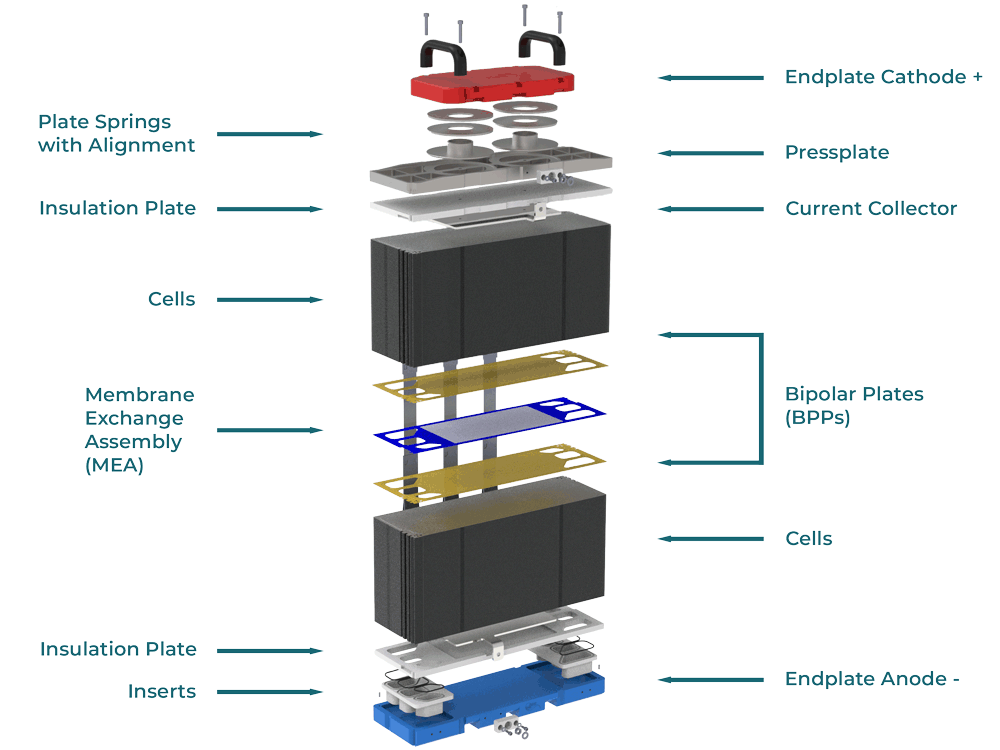
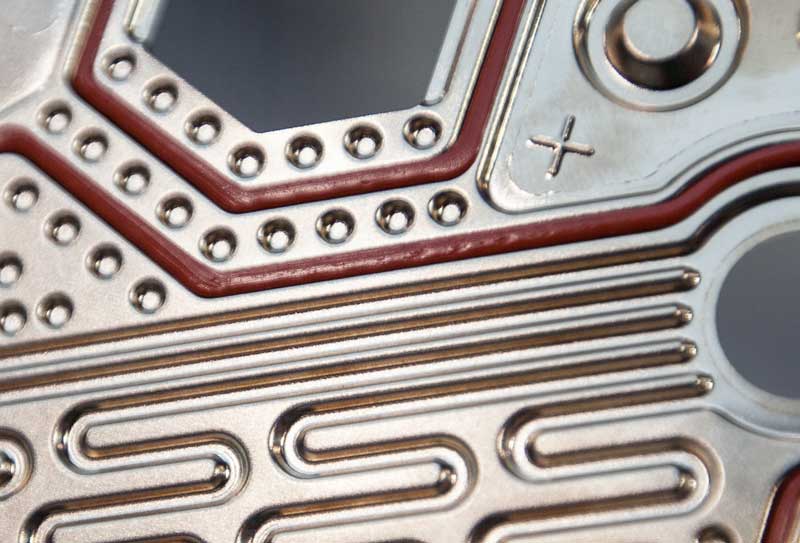
Precision Manufacturing of Fuel Cell Stack Components

At the forefront of metal forming technology, we specialize in the manufacturing of fuel cell stack components, including high-performance metallic bipolar plates (BPPs). The bipolar plate plays a critical role in the overall efficiency and cost-effectiveness of fuel cell and electrolyzer systems. By offering significant advantages over traditional graphite plates, metal bipolar plates enhance conductivity, volumetric cell and stack power densities, and reduce weight.

Image credit ZSW and HyFaB

Why Choose Precision Resource?

We leverage a global network of production facilities, technical centers, and industry and research partners to provide custom bipolar plate solutions that meet the stringent requirements of zero-emission fuel cell vehicles and high-efficiency electrolyzers for the highest-purity green hydrogen production.

In addition to advancing the bipolar plate to commercialized, high-volume manufacturability, Precision Resource is committed to improving overall fuel cell stack performance. We collaborate closely in research and development to assess every aspect of the design, driving continuous innovation to optimize fuel cell stack performance

See how our extensive capabilities and strategic partnership can benefit your fuel cell stack component project and then contact our team to discuss your needs:

Advanced Tooling Solutions

Advanced Tooling Solutions

Precision Resource’s advanced tooling capabilities help ensure precision and efficiency in manufacturing custom metallic bipolar plates. Our in-house tooling design enables us to maintain control over production, delivering high-quality solutions for both prototypes and high-volume runs.

University of Waterloo Partnership

University of Waterloo Partnership

Our collaboration with the University of Waterloo provides access to cutting-edge research and development in fuel cell technology. This partnership allows us to integrate the latest advancement directly into the design and manufacturing of our bipolar plates.

Expert Testing Capabilities

Expert Testing Capabilities

We offer comprehensive testing services, including material analysis and long-term performance evaluation. Our facilities simulate real-world conditions to ensure our fuel cell stack components meet strict reliability, performance, and durability standards.

Global Production & Expertise

Global Production & Expertise

With a global network of production facilities, Precision Resource delivers scalable solutions for fuel cell stack components. Our international presence allows us to efficiently meet demand while maintaining high manufacturing standards and expert support.

Why Choose Precision Resource?

We leverage a global network of production facilities, technical centers, and industry and research partners to provide custom bipolar plate solutions that meet the stringent requirements of zero-emission fuel cell vehicles and high-efficiency electrolyzers for the highest-purity green hydrogen production.

In addition to advancing the bipolar plate to commercialized, high-volume manufacturability, Precision Resource is committed to improving overall fuel cell stack performance. We collaborate closely in research and development to assess every aspect of the design, driving continuous innovation to optimize fuel cell stack performance

See how our extensive capabilities and strategic partnership can benefit your fuel cell stack component project and then contact our team to discuss your needs:

Advanced Tooling Solutions

Precision Resource’s advanced tooling capabilities help ensure precision and efficiency in manufacturing custom metallic bipolar plates. Our in-house tooling design enables us to maintain control over production, delivering high-quality solutions for both prototypes and high-volume runs.

University of Waterloo Partnership

Our collaboration with the University of Waterloo provides access to cutting-edge research and development in fuel cell technology. This partnership allows us to integrate the latest advancement directly into the design and manufacturing of our bipolar plates.

Expert Testing Capabilities

We offer comprehensive testing services, including material analysis and long-term performance evaluation. Our facilities simulate real-world conditions to ensure our fuel cell stack components meet strict reliability, performance, and durability standards.

Global Production & Expertise

With a global network of production facilities, Precision Resource delivers scalable solutions for fuel cell stack components. Our international presence allows us to efficiently meet demand while maintaining high manufacturing standards and expert support.

Diverse Applications for
Fuel Cell Stack Components

Our fuel cell stack components and metallic bipolar plates play a pivotal role in a variety of industries driving the transition to clean energy, including:

The large variety of applications highlights the versatility and importance of our metallic bipolar plate solutions in advancing hydrogen-powered technologies across multiple sectors. Talk to our experts today about your specific application requirements.

Metallic Bipolar Plate Manufacturing FAQs

A metallic bipolar plate (MBPP) is a critical structural component within a fuel cell or electrolyzer stack that distributes reactant gases, conducts electrical current, manages heat, circulates coolant, seals adjacent cells, and removes water produced during operation. Its design directly affects stack efficiency, power density, durability, and cost helping power compact, high-performance systems used in automotive, heavy-duty, aerospace, stationary power, and hydrogen production applications.

Metallic bipolar plates can be manufactured thinner and lighter than graphite while offering better impact resistance, higher power density, and easier high-volume manufacturability. They also allow flow fields, sealing, and coolant channels to be integrated into a single component, reducing stack complexity and cost, making them well suited for automotive and other high-volume hydrogen applications.

Metallic bipolar plates are typically made from corrosion-resistant alloys such as stainless steel, titanium, and specialty coated metals, selected based on the stack’s operating environment. Stainless steel is often selected for its strength and cost-effectiveness, titanium is commonly used in certain electrolyzers, particularly PEM systems, due to its corrosion resistance, and functional coatings are often added to reduce contact resistance while protecting against corrosion.

Metallic bipolar plates are manufactured by precision-forming thin metal foil or sheet into engineered flow-field channels and sealing features using advanced stamping techniques. The formed halves are then joined, typically through laser welding, to create leak-tight assemblies with integrated coolant channels, with conductive coatings often applied to reduce electrical resistance. Precision Resource uses multi-stage forming technologies and proprietary tooling to produce both prototype and high-volume plates.

Precision Resource specializes in custom metallic bipolar plate manufacturing, working with customers to develop components that meet specific design, material, and performance requirements. Our capabilities include multi-stage precision forming, advanced tooling, and specialized joining processes. We support projects from initial prototyping and design development through high-volume series production.

Flow fields are precision-engineered channel networks on a bipolar plate’s surface that direct hydrogen, oxygen, air, coolant, and water throughout the stack. Well-designed flow fields promote uniform gas distribution, efficient water removal, and consistent temperature management. Precision forming and specialized tooling enable manufacturers to produce intricate flow-field geometries that meet specific fuel cell performance and design requirements. Modern designs often using computational fluid dynamics (CFD) to optimize hundreds of intricate channels.

Bipolar plates perform several essential functions within a hydrogen fuel cell stack, including:

  • Reactant Distribution - Directing hydrogen and air/oxygen uniformly across the fuel-cell electrodes.
  •  
  • Electrical Conductivity – Collecting and transferring electrical current between adjacent cells.
  •  
  • Heat Management - Circulating coolant through integrated channels to control temperatures.
  •  
  • Water Management – Removing water produced during the electrochemical reaction process.
  •  
  • Structural Support & Sealing - Maintaining integrity and leak-tight separation of gases and coolant.

Because they influence nearly every aspect of stack performance, bipolar plates are considered one of the most important components determining fuel cell efficiency, durability, and cost.

Yes. Metallic bipolar plates are widely used in electrolyzer stacks, particularly PEM electrolyzers, where their conductivity, corrosion resistance, and precise fluid management support efficient water distribution, gas separation, and heat management. Titanium-based plates are especially common in PEM electrolyzers due to their corrosion resistance in highly oxidative environments.

Metallic bipolar plates improve fuel cell performance in several ways:

  • Lower electrical resistance through conductive materials and coatings
  •  
  • Higher power density through thinner plate designs
  •  
  • Enhanced thermal management via integrated cooling channels
  •  
  • Improved water management and reactant distribution
  •  
  • Increased durability and suitability for high-volume manufacturing

Advanced coatings reduce contact resistance while precision-engineered flow fields improve gas distribution, together delivering more efficient, compact, and cost-effective stacks.

Coatings maintain low electrical contact resistance and prevent corrosion over the life of the stack. Uncoated stainless steel or titanium can form oxide layers that increase resistance and release metallic ions, such as iron, chromium, or nickel, that may contaminate the membrane electrode assembly, reduce membrane conductivity, and accelerate stack degradation. Advanced coatings create a highly conductive, corrosion-resistant interface between the plate and gas diffusion layer, supporting efficiency and long-term durability, including in welded regions.

Yes. Precision Resource works with customers to evaluate coating requirements for metallic bipolar plates based on material selection, operating conditions, and performance specifications. Our team can review your application and design to help identify appropriate coating options that support electrical conductivity, corrosion resistance, and long-term performance.

Modern metallic bipolar plates often incorporate integrated sealing features directly into the formed plate geometry, preventing hydrogen, oxygen, coolant, and water crossover under temperature cycling and pressure fluctuations. This integrated approach also reduces assembly complexity and overall stack cost. Precision Resource’s engineering team can review your design for manufacturability, and evaluate forming and joining processes to support sealing requirements and consistent production quality.

Precision Resource custom manufactures metallic bipolar plates that are used across a range of hydrogen technologies, including passenger vehicles, commercial trucks, buses, rail, marine, aerospace, stationary power generation, and hydrogen electrolyzers. The plates provide a combination of performance, durability, and manufacturability – making them a key technology for the expanding hydrogen economy.

Metallic bipolar plates are well suited to laser welding, which creates precise, leak-tight joints while maintaining dimensional accuracy for high-volume, repeatable manufacturing. Some designs also use active area welding, localized welds within the plate’s active region, to improve metal-to-metal contact, reduce interfacial resistance, and enhance structural rigidity and long-term durability. Precision Resource integrates precision welding capabilities into its metallic bipolar plate manufacturing processes and can evaluate your design to identify appropriate joining methods and production requirements.

We can produce metallic bipolar plates with a variety of features and customizations beyond standard flow fields, including integrated seals, coolant channels, conductive coatings, precision laser welds for leak-tight sealing, and active area welds. Together, these features improve conductivity, reduce contact resistance, enhance sealing performance, and support cost-effective, high-volume manufacturing. Our engineering team can review your design and evaluate optimal production processes.

Yes. Precision Resource supports metallic bipolar plate development from sub-scale and full-scale prototypes for bench testing through commercial series production, and our engineering team works with you to advise on DFM and manufacturing considerations throughout the process. Our advanced tooling and multi-stage forming capabilities support the transition from initial development to repeatable, high-volume manufacturing.

Metallic bipolar plates must meet stringent requirements for dimensional accuracy, electrical conductivity, corrosion resistance, and leak-tight performance. Testing requirements vary by application and design. Precision Resource offers material analysis and performance evaluation capabilities to help assess the reliability, durability, and quality of fuel cell stack components.

Precision stamping is used to form thin metal sheets into the intricate flow-field channels and other functional features required in metallic bipolar plates. Specialized tooling and multi-stage forming processes help manufacturers achieve complex geometries, dimensional consistency, and repeatable production. Precision Resource uses advanced forming technologies and proprietary tooling to manufacture custom metallic bipolar plates for prototype and high-volume applications.

Leverage Our Fuel Cell Stack Components Expertise

Contact Us

This field is for validation purposes and should be left unchanged.
Name(Required)
Privacy Policy Agreement(Required)
I have read and agree to Precision Resource’s Online Privacy Notice
Personal Information Transfer Consent
I consent to the transfer and processing of my personal information as described in the Online Privacy Notice, including in the United States by Precision Resource, Inc.